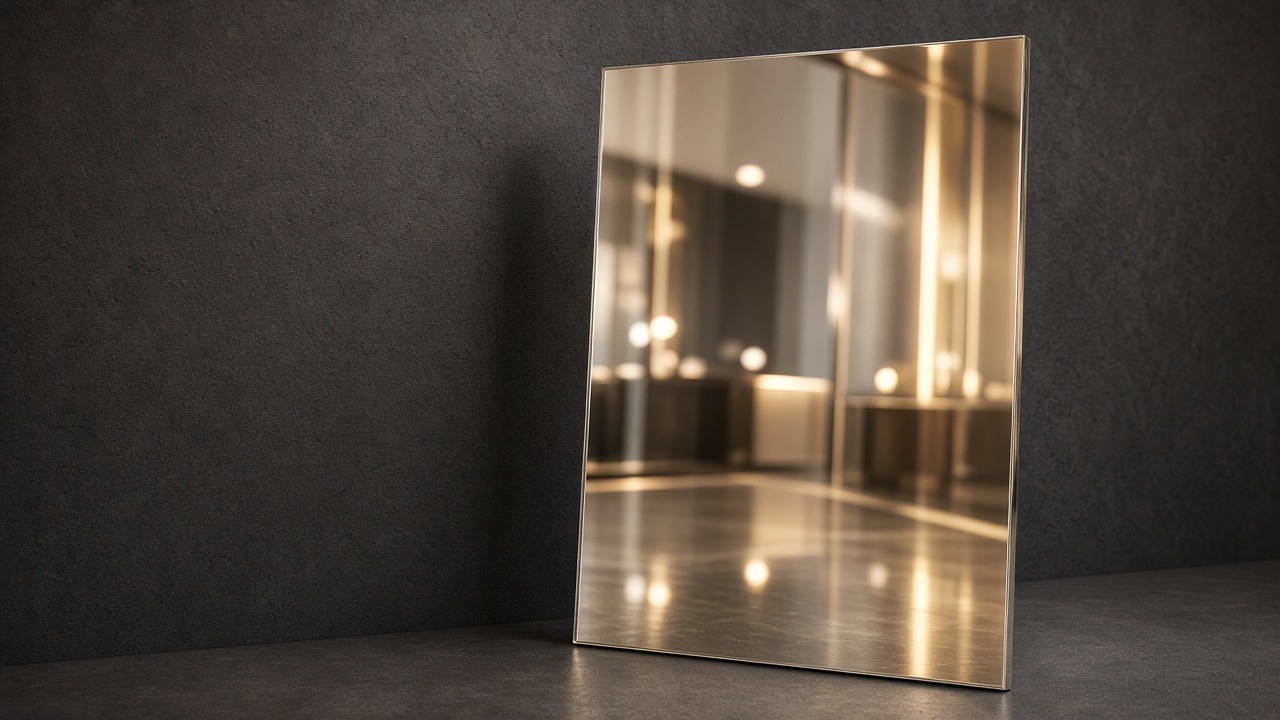
Colored acrylic mirror sheet is used in retail displays, signage, interior decoration, furniture, exhibitions and decorative panels where a reflective surface is required without the weight and handling demands of conventional glass. Made from acrylic (PMMA) with a reflective coating, it combines a mirror-like appearance with easy cutting and fabrication. For buyers, however, choosing the right sheet is not simply a matter of selecting a color. Thickness, sheet size, mirror type, backing, processing method and installation conditions can all affect the final result. This guide explains the main specifications to check before placing an order and how to match them with the intended application. 1. What Is Acrylic Mirror Sheet? Acrylic mirror sheet is a PMMA panel with a reflective coating applied to one surface. The acrylic substrate provides a lower-density alternative to glass, while the mirror coating creates the reflective appearance required for decorative and display applications. A typical acrylic substrate has a density of around 1.19–1.20 g/cm³, compared with approximately 2.5 g/cm³ for common glass. This difference means that an acrylic mirror panel of the same dimensions can be substantially lighter than a glass mirror. Property Acrylic Mirror Conventional Glass Mirror Base Material PMMA acrylic Glass Typical Density Approx. 1.19–1.20 g/cm³ Approx. 2.5 g/cm³ Handling Lightweight and easier to handle Heavier and more fragile Fabrication Cutting, drilling, CNC and laser processing Requires glass-specific processing Color Options Silver, gold, bronze, blue, red, green and custom colors More limited 2. Why Choose Acrylic Mirror for Decorative and Display Projects? The main advantage of acrylic mirror is the combination of reflective appearance and fabrication flexibility. It can be supplied in different colors and thicknesses and can be cut into letters, geometric patterns, logos or other shapes. For large displays or installations where handling weight is important, the lower density of PMMA can also simplify transportation and positioning. Acrylic is also less likely than glass to produce sharp shards when broken, which can be relevant for public-facing displays and decorative installations. Another advantage is processing. A custom acrylic mirror sheet can be supplied according to specified dimensions and processed by cutting, drilling, CNC routing or engraving. This is useful when the buyer needs finished components rather than full standard sheets. 3. Selecting the Right Thickness Thickness should be selected according to sheet size, mounting method, required rigidity and the level of handling expected during installation. Typical Thickness Suitable Uses Key Consideration 0.8–1.0 mm Light decorative elements, craft and temporary displays Flexible and easy to process 1.5–2.0 mm Retail displays, signage and decorative panels Good balance of weight and rigidity 2.5–3.0 mm Wall decoration, furniture and commercial displays Greater rigidity for larger panels 4.0–6.0 mm Larger decorative panels and demanding fabrication Higher rigidity and structural support These ranges are general purchasing references rather than universal design rules. Actual requirements depend on panel dimensions, support spacing and installation conditions. For large panels, it is important to confirm flatness and mounting conditions before production. 4. Color Selection Is More Than an Appearance Choice Silver remains the conventional mirror finish, but colored mirror acrylic is increasingly useful for projects where the reflective surface is part of the visual design. Common options include gold, rose gold, bronze, blue, red, green, yellow, black and other tinted finishes. Color should be evaluated under the lighting conditions where the product will be installed. A gold or bronze mirror may appear significantly different under warm retail lighting compared with daylight. For repeat orders, buyers should approve a physical sample or reference color before mass production. Color Typical Visual Effect Common Applications Silver Traditional bright reflection Signage, interiors, displays Gold Warm metallic appearance Retail, furniture, decoration Rose Gold Soft metallic tone Cosmetic and fashion displays Bronze Warm and subdued reflection Interior decoration, furniture Blue / Green Colored reflective effect Exhibitions, creative displays Red / Yellow Strong visual accent Advertising and decorative panels 5. Consider the Mirror Type and Backing Not every acrylic mirror product has the same construction. Buyers should confirm whether they need a standard single-sided mirror, double-sided mirror, two-way mirror or adhesive-backed version. The backing is particularly important because the reflective coating is located behind the acrylic substrate. A protective backing can help protect the reflective layer during handling and installation. For projects requiring direct mounting, adhesive-backed material can reduce installation steps. For larger panels, however, the substrate condition, adhesive compatibility and mounting method should be reviewed before production. 6. Processing Options for Custom Acrylic Mirror Acrylic mirror can be fabricated into different shapes and dimensions, but the mirror coating needs to be considered during processing. Cutting parameters, tool selection and handling methods can affect the finished edge and reflective coating. Processing Method Typical Purpose Cut to Size Producing panels to specified dimensions Laser Cutting Complex shapes, letters and decorative patterns CNC Routing Profiles, cut-outs and precision components Drilling Mounting holes and mechanical fixing Engraving Logos, patterns and decorative details Edge Finishing Improving edge appearance and handling When ordering cut to size acrylic mirror, provide a drawing whenever possible. The drawing should identify overall dimensions, hole locations, cut-outs, corner radii and quantity. This reduces interpretation errors during production and makes quotation more accurate. 7. Where Is Acrylic Mirror Sheet Used? The material is suitable for applications where appearance, weight and fabrication flexibility are important. Retail Displays: Product stands, cosmetic displays, shelves and visual merchandising fixtures. Signage: Decorative signs, logos, lettering and promotional panels. Interior Decoration: Wall panels, feature walls, partitions and decorative surfaces. Furniture: Cabinet inserts, decorative panels, vanity components and furniture accents. Exhibitions: Booth decoration, display structures and temporary installations. Events: Stage decoration, wedding displays and custom decorative elements. For commercial projects, buyers should consider cleaning methods and environmental exposure. Acrylic surfaces can be scratched more easily than glass, so suitable cleaning materials and installation practices should be specified for high-contact applications. 8. A Practical Specification Checklist for Buyers Before requesting a quotation, prepare the following information. A complete specification normally allows a supplier to recommend the appropriate material more efficiently. Specification Information to Provide Material PMMA / acrylic mirror Thickness Required thickness or acceptable range Sheet Size Standard sheet or custom dimensions Color Silver, gold, bronze, tinted or custom color Mirror Type Single-sided, double-sided or two-way Backing Standard backing, adhesive backing or project-specific option Processing Cutting, drilling, CNC, laser cutting or engraving Quantity Sheets, pieces or project volume Application Display, signage, furniture, interior or other use 9. How to Avoid Common Ordering Problems Several problems can be avoided by confirming specifications before production. Do not select thickness based only on price; a thinner sheet may be unsuitable for a large unsupported panel. Do not rely only on screen color when ordering colored mirror acrylic; request a physical sample when color consistency is important. For custom shapes, provide dimensioned drawings rather than photographs alone. For repeat projects, keep the approved sample, color reference and production specification on record. If the material will be installed outdoors or in a demanding environment, confirm UV resistance, backing performance and the manufacturer's recommended service conditions before ordering. 10. Choosing a Supplier for Bulk Orders For distributors, signage companies, furniture manufacturers and project contractors, supplier capability is as important as the basic material specification. A reliable supplier should be able to confirm PMMA grade, thickness tolerance, sheet dimensions, mirror coating, backing and protective film before production. It is also useful to check whether the supplier can provide consistent colors and dimensions across repeat batches. For buyers sourcing colored acrylic mirror sheet in production quantities, sample approval and documented specifications can reduce differences between initial and repeat orders. Ask for production samples when the project includes complex cutting or engraving. This allows the buyer to check edge quality, dimensions, reflective appearance and mounting compatibility before committing to a larger production run. Request the Right Acrylic Mirror Specification The right acrylic mirror sheet depends on more than color and appearance. Thickness, dimensions, mirror type, backing, processing and installation conditions all affect the finished product. By confirming these specifications before ordering, buyers can reduce fabrication problems and select a material that matches the actual requirements of the project. For custom orders, provide the required size, thickness, color, quantity, application and processing drawing. These details give the supplier enough information to evaluate the specification and prepare a more accurate quotation.
Read More